






Outsourcing de Desarrollo de Juegos Móviles en 2026: Tendencias, Costes y Cómo Elegir al Socio Adecuado
El mercado de outsourcing de juegos móviles ya no es una nota al margen sobre reducción de costes. Según Business Research Insights, el mercado global de outsourcing de desarrollo de juegos móviles está valorado en 2.210 millones de dólares en 2026 y se proyecta que alcance los 7.230 millones en 2035, con un CAGR del 13,8%. Esa trayectoria refleja algo estructural: los estudios de todo tamaño han concluido que construir cada sistema internamente es más lento, arriesgado y caro que asociarse con equipos que ya tienen la infraestructura.
La presión que impulsa esa conclusión es real. Los juegos live-service requieren soporte operativo desde el soft launch. Los títulos hyper-casual necesitan lanzarse rápido e iterar aún más rápido. Los juegos mid-core exigen backends multijugador, sistemas de economía y pipelines de analítica que tardan meses en construirse desde cero. Mientras tanto, el 68% de los estudios externaliza el desarrollo para reducir costes y escalar la producción en arte, animación y fases de testing.
Pero el outsourcing mal gestionado es caro de otra manera. Scope vago, tarifas baratas que se inflan en ciclos de retrabajos, y socios que tratan tu producto como una cola de tickets: estos son los fallos que definen el mal outsourcing. Para más contexto sobre cómo el outsourcing encaja en la estrategia de producción, consulta nuestra guía sobre cómo el outsourcing de desarrollo de juegos ayuda a las empresas a escalar.
Clave: La tarifa por hora más barata raramente es el proyecto más barato. El coste total lo determinan la complejidad de los sistemas, la composición del equipo, el alcance del LiveOps y el retrabajo que genera el proceso de tu socio.
Las Tendencias que Están Transformando el Outsourcing de Juegos Móviles en 2026

El Co-Desarrollo Ha Reemplazado las Relaciones Tradicionales con Proveedores
El modelo antiguo: entregar una tarea, revisar el resultado, repetir. El nuevo modelo: equipos externos integrados en tu pipeline de producción, compartiendo objetivos de sprint, asistiendo a revisiones de diseño y siendo dueños de los resultados, no solo de las entregas. Los estudios tratan cada vez más a sus socios de outsourcing como extensiones de su equipo central, no como contratistas externos. Este giro hacia el co-desarrollo es el mayor cambio estructural en cómo se construyen los juegos móviles hoy.
El Outsourcing de LiveOps Es Ahora una Función Central
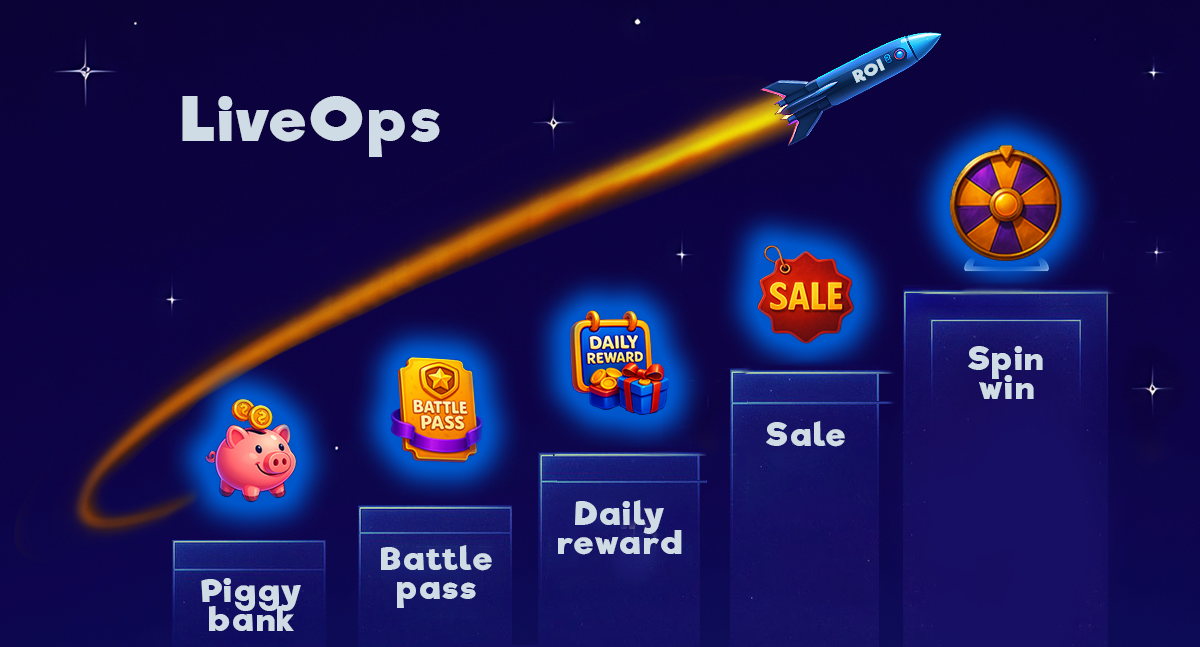
Contar con un partner especializado en outsourcing de LiveOps para juegos móviles permite mantener este ritmo sin sobrecargar al equipo interno.
El soporte post-lanzamiento se ha convertido en una de las funciones más externalizadas en los juegos móviles. Los eventos de temporada, las actualizaciones de balance, el ajuste de monetización y los ciclos de contenido impulsados por la comunidad requieren capacidad dedicada que la mayoría de los estudios no puede sostener internamente. Los títulos free-to-play, que representan el 71% del mercado, son el principal motor de esta demanda.
Los Pipelines Asistidos por IA Están Comprimiendo los Plazos
Las herramientas de IA están integradas en los flujos de producción artística, automatización de QA y diseño de niveles en los estudios serios. El efecto práctico son ciclos de iteración más rápidos y menores costes por asset, especialmente en arte 2D y UI.
Cuatro tendencias que definen el panorama de outsourcing en 2026:
- Co-desarrollo frente a relaciones transaccionales con proveedores
- Outsourcing de LiveOps como función permanente, no como improvisación post-lanzamiento
- Pipelines asistidos por IA que comprimen plazos de arte, QA y diseño
- Flujos de trabajo distribuidos en la nube que permiten colaboración global en tiempo real
Qué Cuesta Realmente el Outsourcing: Tarifas, Complejidad y los Multiplicadores Ocultos
Las tarifas por hora son el número en el que los estudios se fijan y el número que menos importa. El coste real de un engagement de outsourcing lo determinan la complejidad del scope, los sistemas que requiere tu juego, la composición del equipo y el retrabajo que genera tu proceso de producción. Para un desglose completo del presupuesto, consulta nuestra guía sobre cuánto cuesta desarrollar un juego móvil en 2026.
Tarifas por Hora por Región y Rol
| Rol | Asia | Europa del Este | Mercados Occidentales |
|---|---|---|---|
| Desarrollador | $25–$50/hr | $50–$100/hr | $100–$200+/hr |
| Artista | $20–$45/hr | $40–$80/hr | $80–$150+/hr |
| Especialista QA | $15–$30/hr | $30–$55/hr | $60–$100/hr |
Un desarrollador dedicado trabajando un mes completo cuesta típicamente entre $6.000 y $12.000 según región y seniority.
Coste Total por Complejidad del Juego
| Tipo de Juego | Sistemas Necesarios | Coste Total Estimado |
|---|---|---|
| Hyper-casual | Loop central, analítica básica | $20K–$80K |
| Mid-core móvil | Progresión, economía, analítica | $80K–$250K+ |
| Multijugador / live-service | Backend, LiveOps, herramientas admin | $300K–$2M+ |
Los Multiplicadores Ocultos que la Mayoría de los Estudios Subestima
Aquí es donde los proyectos se salen del presupuesto. Los sistemas centrales como la infraestructura multijugador, la economía del juego y las herramientas de eventos LiveOps no son líneas de presupuesto, sino pistas de desarrollo completas. Construidos desde cero, estos sistemas pueden representar el 50% o más del esfuerzo total de desarrollo. Aprende cómo construir pipelines escalables mediante diseño modular reduce drásticamente estos multiplicadores.
La ecuación real del coste: tarifa/hora × horas × multiplicador de retrabajo. Reduce el multiplicador de retrabajo y el total baja significativamente, incluso con tarifas más altas.
Modelos de Colaboración: ¿Qué Estructura Encaja con tu Proyecto?
Los Tres Modelos Comparados
| Modelo | Ideal Para | Perfil de Coste | Riesgo Clave |
|---|---|---|---|
| Proyecto con scope fijo | Prototipos, funcionalidades pequeñas, trabajo claramente delimitado | Más bajo al inicio, más alto a largo plazo por retrabajos | Inflexible; los cambios de scope son caros |
| Equipo dedicado | Desarrollo a largo plazo, escalado de capacidad | Coste mensual predecible; crece linealmente con el equipo | Requiere gestión interna sólida |
| Co-desarrollo | Juegos de escala media/grande, productos live-service | Equilibrado; mayor eficiencia compensa la tarifa | Requiere alineación cultural y mentalidad de propiedad compartida |
Por Qué el Co-Desarrollo Es el Estándar Moderno para Juegos Live-Service
Los contratos de scope fijo tenían sentido cuando los juegos se lanzaban una vez y se quedaban así. Los juegos móviles live-service no funcionan así. Los roadmaps cambian tras el soft launch. Los sistemas de monetización se rediseñan según los datos de retención. Un socio de co-desarrollo está diseñado para esta realidad: planificación de sprint compartida, responsabilidad compartida sobre las métricas del producto y un equipo con contexto sobre por qué se toman las decisiones, no solo qué construir a continuación.
Asia vs. Europa: Elegir la Región de Outsourcing Correcta
| Factor | Asia (India, Vietnam, Filipinas) | Europa del Este (Polonia, Ucrania, Estonia) |
|---|---|---|
| Tarifas por hora | $25–$50/hr | $50–$100/hr |
| Volumen de talento | Muy grande | Moderado pero muy especializado |
| Comunicación | Requiere estructura PM sólida | Alta; fuerte alineación cultural con estudios occidentales |
| Solapamiento horario | Mínimo con US/EU (trabajo asíncrono) | Significativo con EU; viable con US |
| Ideal para | Producción artística, QA, tareas de alto volumen | Desarrollo full-cycle, co-desarrollo, LiveOps |
Cómo Evaluar a un Socio de Outsourcing de Juegos Móviles
- Productos publicados, no solo portfolios. Un portfolio muestra dirección artística. Un producto publicado en App Store o Google Play demuestra que el socio entiende los requisitos de submission, la optimización de rendimiento y el soporte post-lanzamiento.
- Experiencia en género y sistemas. La infraestructura multijugador, las economías de juego y las herramientas LiveOps son especializadas. Un socio que ya ha construido estos sistemas avanzará más rápido.
- Transparencia en el flujo de trabajo. ¿Cómo reportan el progreso? ¿Puedes ver el backlog? Los socios que resisten esta transparencia están enviando una señal.
- Escalabilidad y capacidad post-lanzamiento. Evalúa si el socio puede soportar LiveOps, analítica y ciclos de contenido continuos tras el lanzamiento.
- Infraestructura modular y de backend. Los mejores socios traen sistemas preconstruidos y validados en producción para analítica, control admin y herramientas LiveOps.
El Diferenciador de Galaxy4Games
Galaxy4Games lleva más de 15 años construyendo y lanzando sus propios productos junto a proyectos de clientes. Ese track dual importa: un estudio que publica sus propios juegos entiende las dinámicas del mercado, las mecánicas de retención y las realidades de monetización de formas en que los proveedores puramente de servicio no pueden. Sus soluciones modulares y framework LiveOps provienen de sistemas activos en productos en vivo — cobertura de loops de gameplay central, analítica backend, control admin e infraestructura de eventos.
El Outsourcing en 2026 Se Trata de Construir con Más Inteligencia, No Solo Más Barato
Los estudios que ganan en móviles en 2026 comparten un enfoque común: tratan el outsourcing como una decisión estratégica de producción, no como una táctica de reducción de costes. Eligen socios basándose en el historial de productos publicados, profundidad de sistemas y capacidad LiveOps. Estructuran los engagements como co-desarrollos, no como colas de tareas.
El marco de decisión:
- Ajusta tu modelo de colaboración al tipo de juego: scope fijo para tareas discretas, equipo dedicado para escalado a largo plazo, co-desarrollo para productos live-service
- Evalúa el coste total, no la tarifa por hora: la complejidad, el scope de sistemas y el potencial de retrabajo importan más que el número de la factura
- Elige socios con productos publicados: los portfolios son presentaciones, los juegos publicados son prueba
- Prioriza socios que aporten sistemas probados: cada sistema que no tienes que construir desde cero es presupuesto y tiempo que conservas
El socio de outsourcing adecuado no solo ejecuta tu roadmap. Te ayuda a construir uno que valga la pena ejecutar. Explora también los mejores desarrolladores de juegos para RPGs y MMORPGs móviles personalizados.
Para más opciones, compara nuestra selección de las mejores empresas de outsourcing de desarrollo de videojuegos móviles y nuestro ranking de las 10 mejores empresas de outsourcing de desarrollo de videojuegos móviles.