






Monetization Strategies for Mobile Games and Apps That Actually Work
In today’s mobile market, launching a game is only half the challenge. Sustainable revenue depends on well-designed monetization systems that balance player experience with long-term profitability. In 2026, the most successful mobile games and apps use hybrid monetization models, data-driven optimization, and LiveOps monetization support strategies to maximize lifetime value (LTV).
This article explores monetization strategies that consistently deliver results, how they impact retention and scalability, and how studios can implement them effectively.
Why Monetization Strategy Must Be Designed Early
Monetization is not something that should be added after launch. It must be integrated into core design decisions from the beginning.
Early monetization planning affects:
-
Core gameplay loops
-
Progression pacing
-
Economy balance
-
Backend infrastructure
-
LiveOps planning
Game development studios that align monetization with game design from day one typically achieve stronger retention and more stable revenue streams.
1. In-App Purchases (IAP)
In-app purchases remain one of the most powerful monetization strategies for mobile games. Effective IAP systems focus on:
-
Cosmetic items (skins, customization)
-
Progression boosts
-
Limited-time bundles
-
Character upgrades
-
Season passes
The key to successful IAP implementation is value perception. Players should feel that purchases enhance their experience without creating unfair advantages.
2. In-Game Advertising
Advertising remains a major revenue driver, especially for free-to-play mobile games.
Common ad formats include:
-
Rewarded video ads
-
Interstitial ads
-
Banner ads
-
Playable ads
Rewarded ads typically perform best because they offer optional value in exchange for player engagement. Smart frequency control is essential to prevent churn.
3. Hybrid Monetization Models
In 2026, hybrid models combining ads and IAP dominate the market. This approach allows studios to:
-
Monetize non-spending users through ads
-
Capture high-value users through IAP
-
Optimize revenue across multiple player segments
Hybrid monetization reduces dependency on a single revenue source and improves overall stability.
4. Subscriptions and Battle Pass Systems
Subscription models and battle passes create predictable recurring revenue. They are particularly effective when tied to:
-
Seasonal content
-
Exclusive rewards
-
Early access features
-
VIP progression tracks
Battle passes encourage consistent engagement while supporting LiveOps strategies.
5. LiveOps-Driven Revenue Growth
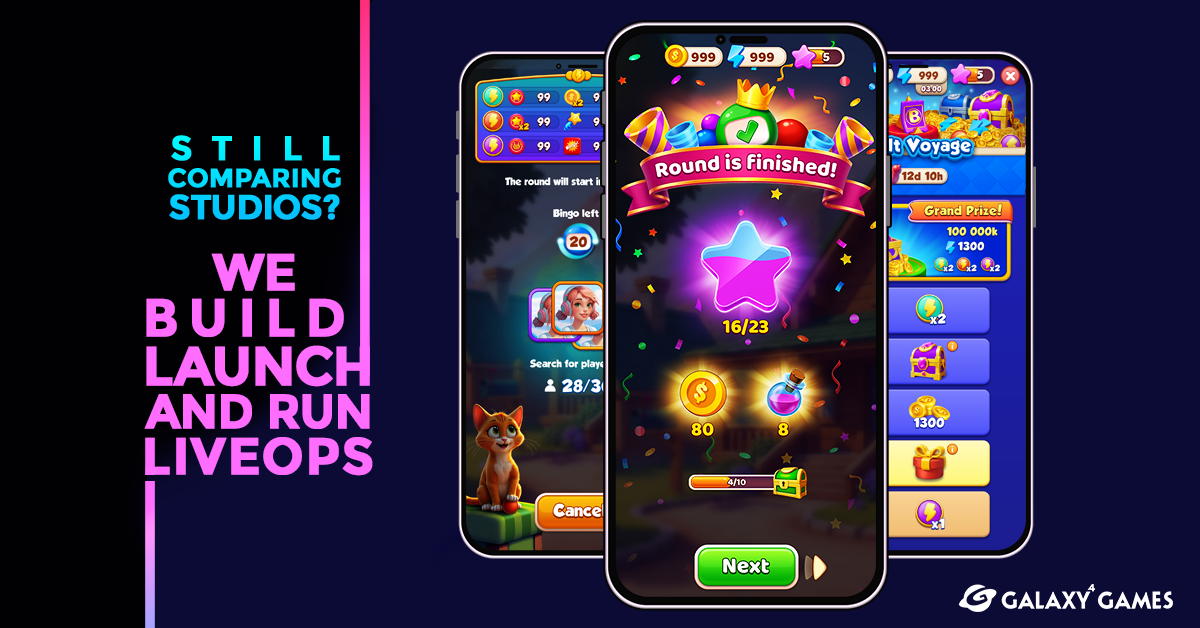
LiveOps plays a central role in modern monetization. Limited-time events, seasonal offers, and rotating content drive urgency and spending.
LiveOps monetization tactics include:
-
Time-limited skins
-
Special event bundles
-
Dynamic pricing experiments
-
Event-based progression rewards
Games designed with LiveOps-ready architecture consistently outperform static monetization models.
6. Data-Driven Optimization
Effective monetization relies on analytics. Studios must track:
-
ARPU (Average Revenue Per User)
-
LTV (Lifetime Value)
-
Conversion rates
-
Retention metrics (D1, D7, D30)
-
Funnel performance
Continuous A/B testing and behavioral segmentation improve monetization efficiency without harming player experience.
The Role of Modular Systems in Monetization
Scalable monetization requires flexible backend systems. Modular development frameworks allow studios to:
-
Introduce new monetization features quickly
-
Test pricing variations
-
Deploy event-based offers
-
Update store configurations without full rebuilds
At Galaxy4Games, we design monetization systems within modular, production-tested architectures that support rapid iteration, LiveOps scalability, and long-term growth.
Common Monetization Mistakes
-
Overloading players with ads
-
Creating pay-to-win systems
-
Ignoring economy balance
-
Failing to test pricing models
-
Launching without analytics integration
Balanced monetization protects retention while driving revenue.
Final Thoughts
Monetization strategies that actually work in 2026 are balanced, player-focused, and data-driven. The most successful mobile games development combine hybrid revenue models, LiveOps integration, and scalable backend infrastructure.
At Galaxy4Games, we help studios design and implement monetization systems that maximize lifetime value without compromising player experience. If you’re building a mobile game or app and want a scalable monetization strategy from day one, let’s build it together.