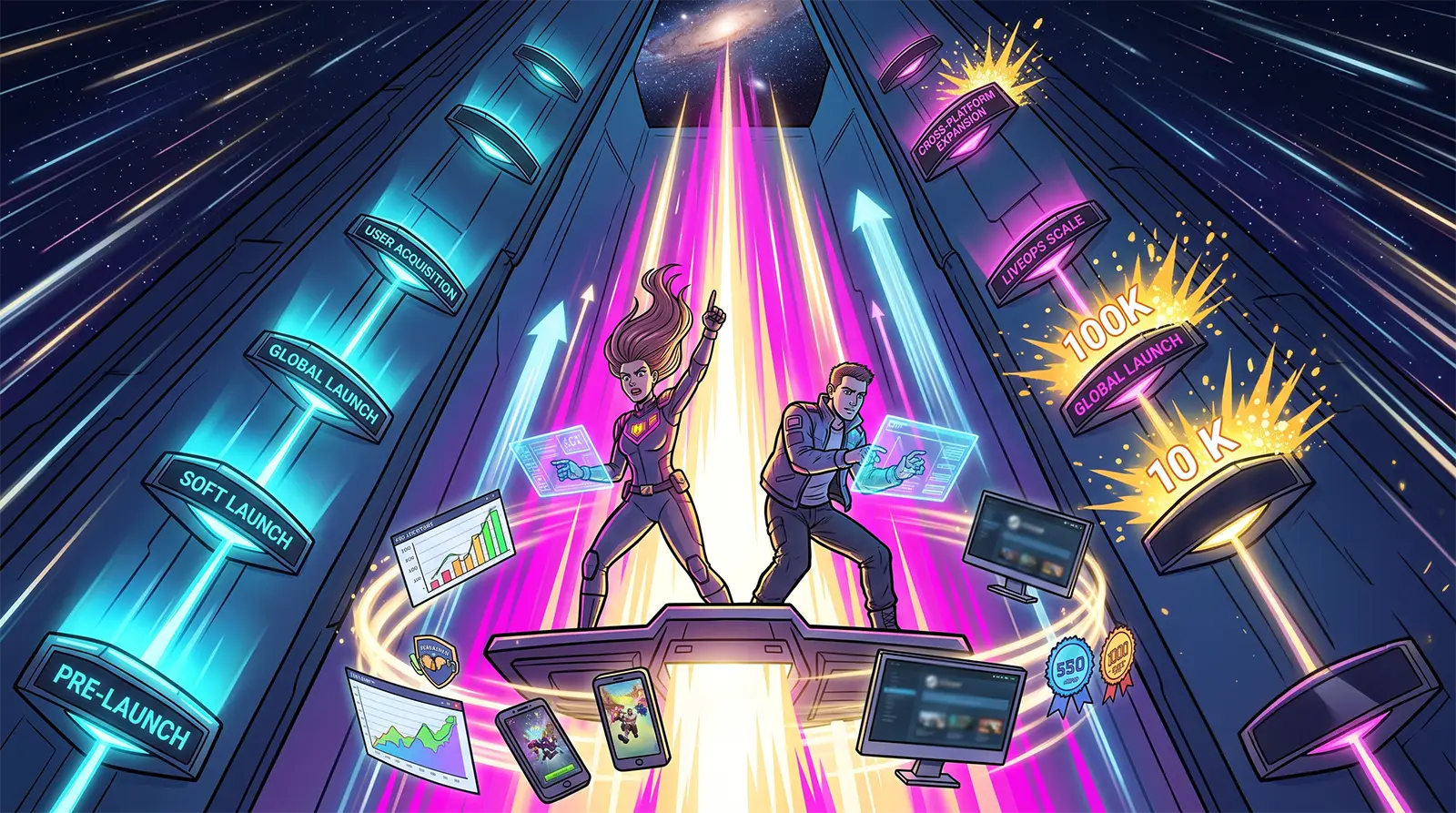





You built the game. Now what?
Whether you are a startup looking for a publisher, an indie founder planning to self-publish, or a studio preparing to pitch investors - the answer is the same: you need real UA data before any serious conversation can happen. Publishers want to see your Day 1, Day 7, and Day 30 retention. Investors want your CPI, ROAS, and early LTV benchmarks. No one is writing a check or signing a deal based on a demo and a pitch deck anymore.
This is the new reality of mobile game publishing - and it is one that many studios still do not recognize until they are already in the room without the numbers.
At Galaxy4Games, we have been through this with our own live titles on the App Store and Google Play. We know what publishers ask for, because we have prepared those answers ourselves. And we now help our clients do the same - not just delivering a finished build as part of our full-cycle game development service, but taking the game all the way through its first UA cycle, gathering the KPIs that make the next conversation possible.
Ad creative production is a core part of that process. This page explains how we approach it.
Full-Cycle Means More Than a Finished Build
The traditional definition of a full-cycle studio is a team that handles everything from concept to launch. That definition is no longer enough.
Today, launching a game without running your first UA is like delivering a product without ever testing it with real users. The build is not done until you have real audience data - because that data is what every next step depends on. Publisher conversations, investor pitches, scaling decisions, LiveOps prioritization: all of it starts with your first UA results.
This is why Galaxy4Games now includes the full first-UA cycle as part of what we deliver through our game launch and scale services. Not as an add-on. As a core part of the engagement.
What the Full First-UA Cycle Includes
Getting a game to its first meaningful KPIs requires five components working together:
-
ASO (App Store Optimization) - store page copy, screenshots, preview video, and metadata optimized before any paid traffic arrives, so installs convert and the store algorithm starts working in your favor from day one
-
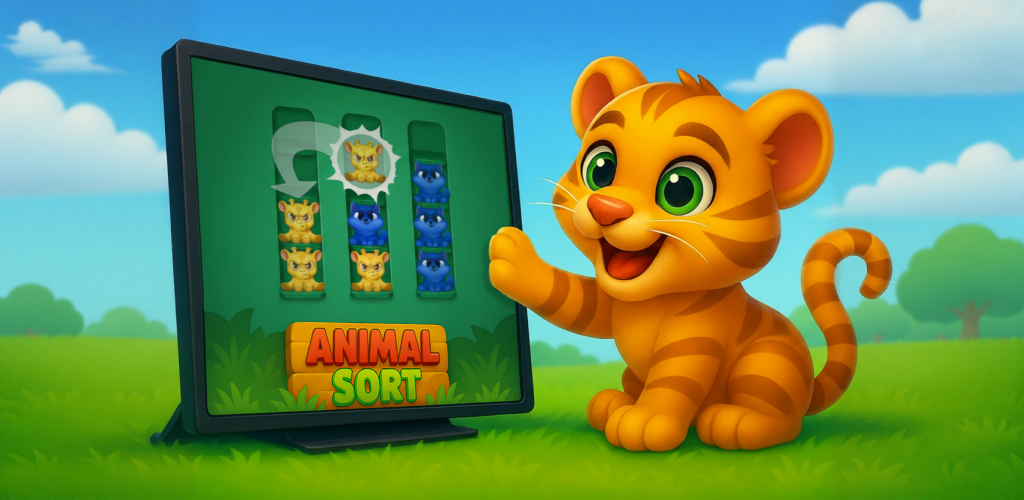
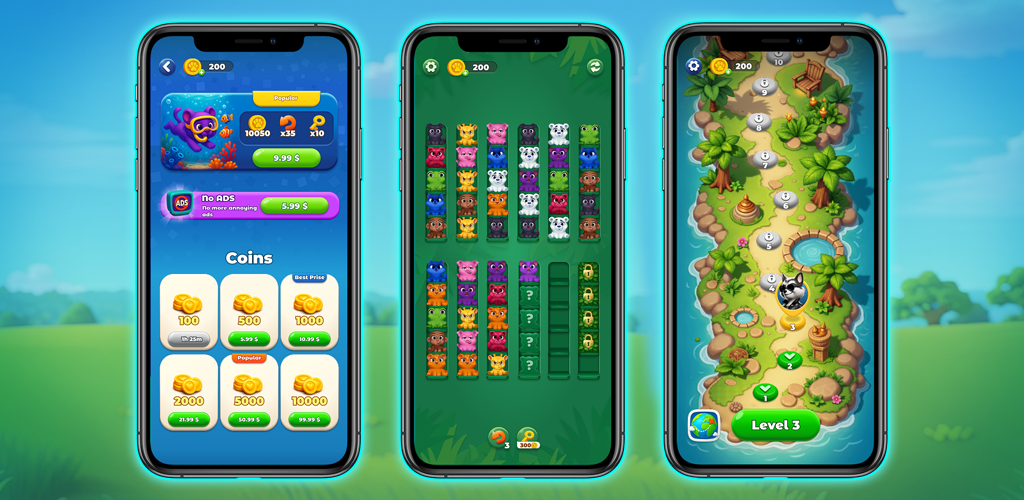
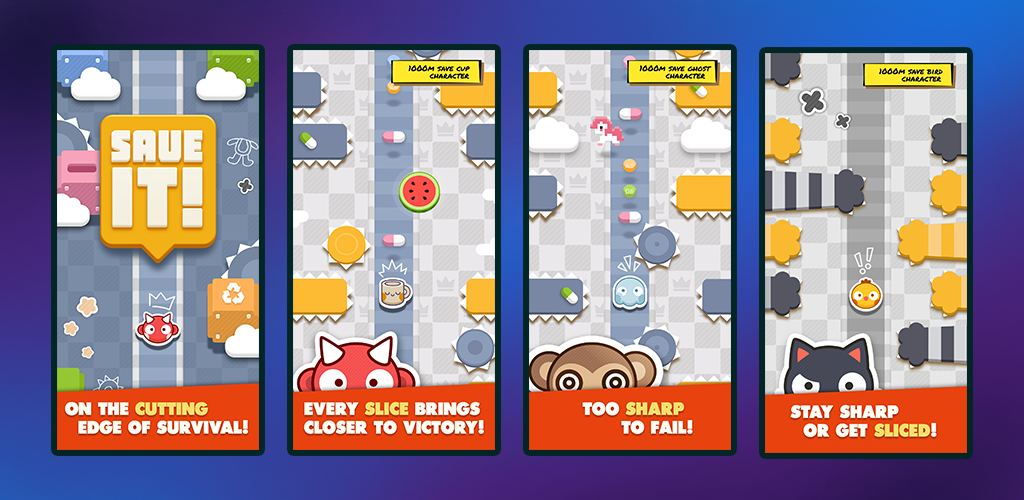
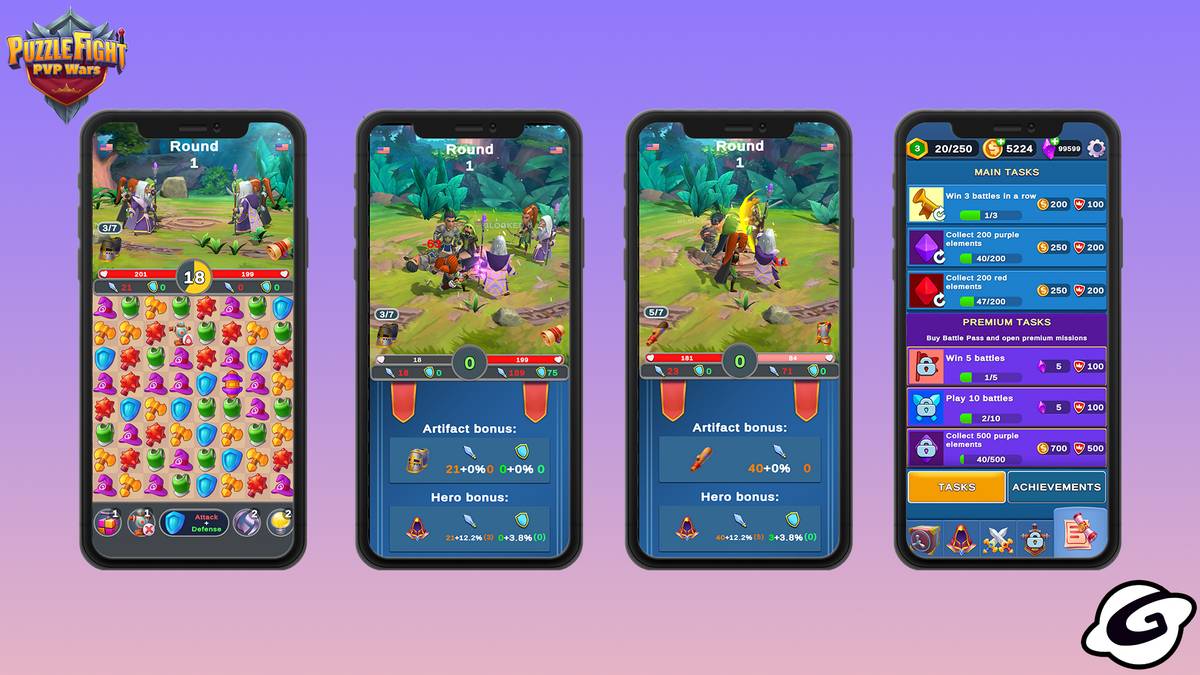
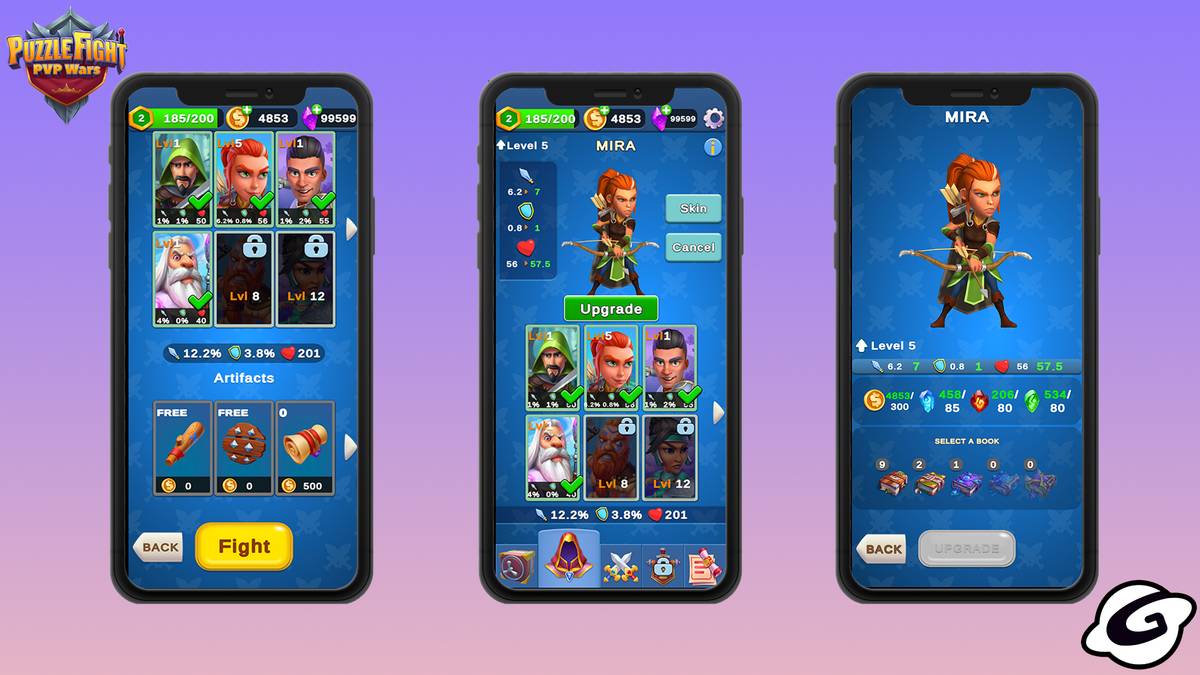
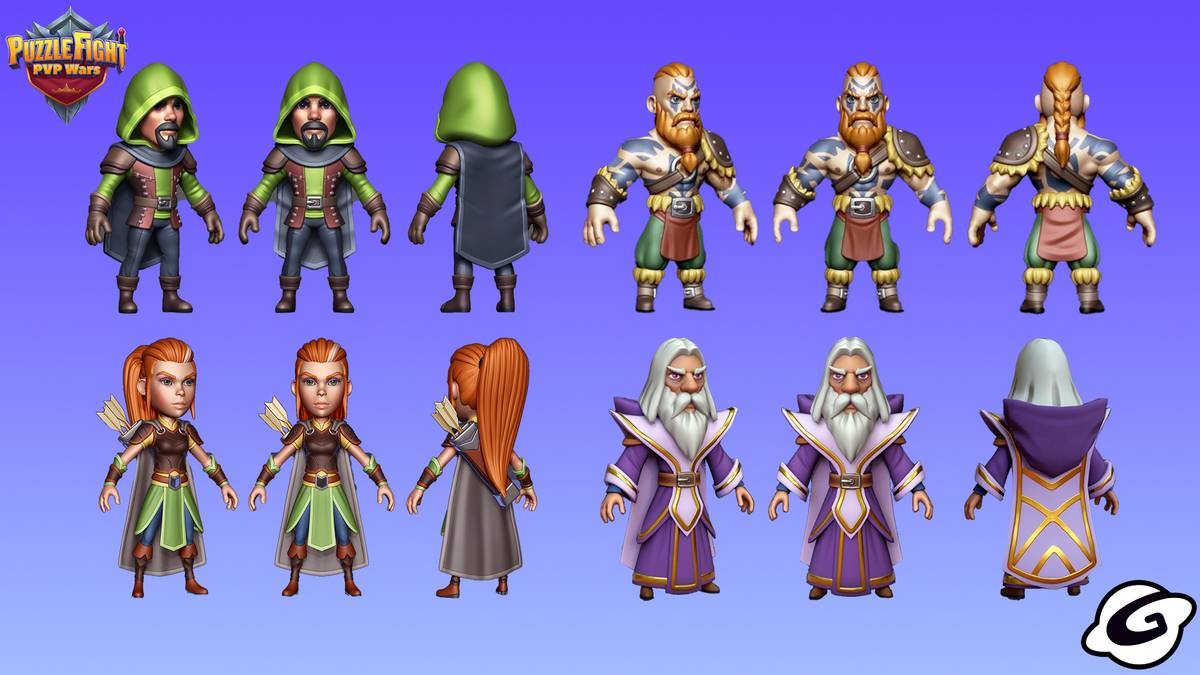
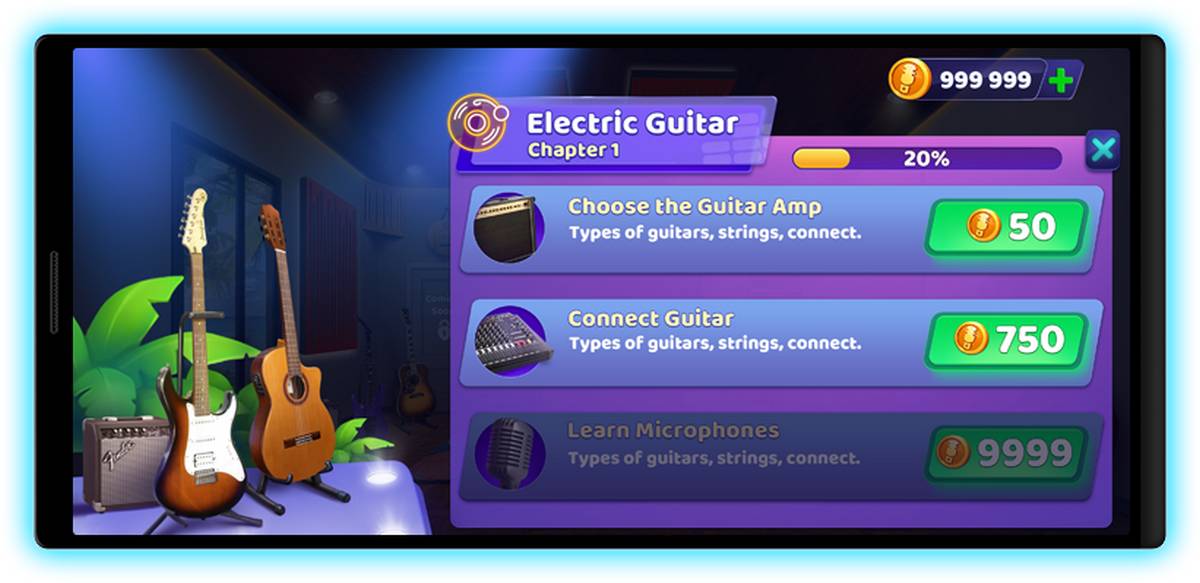
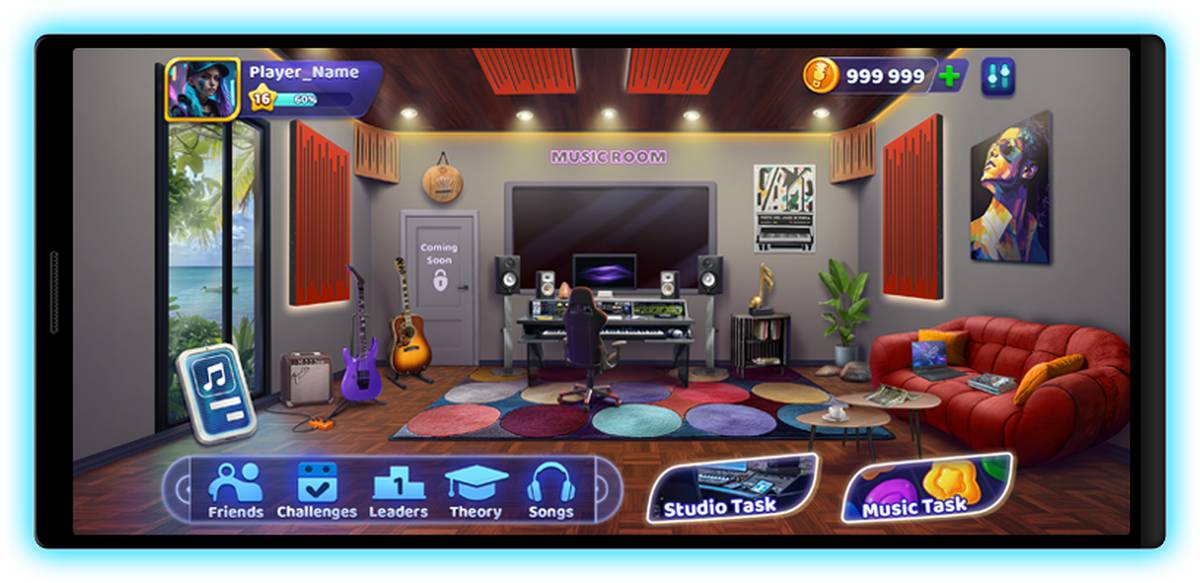
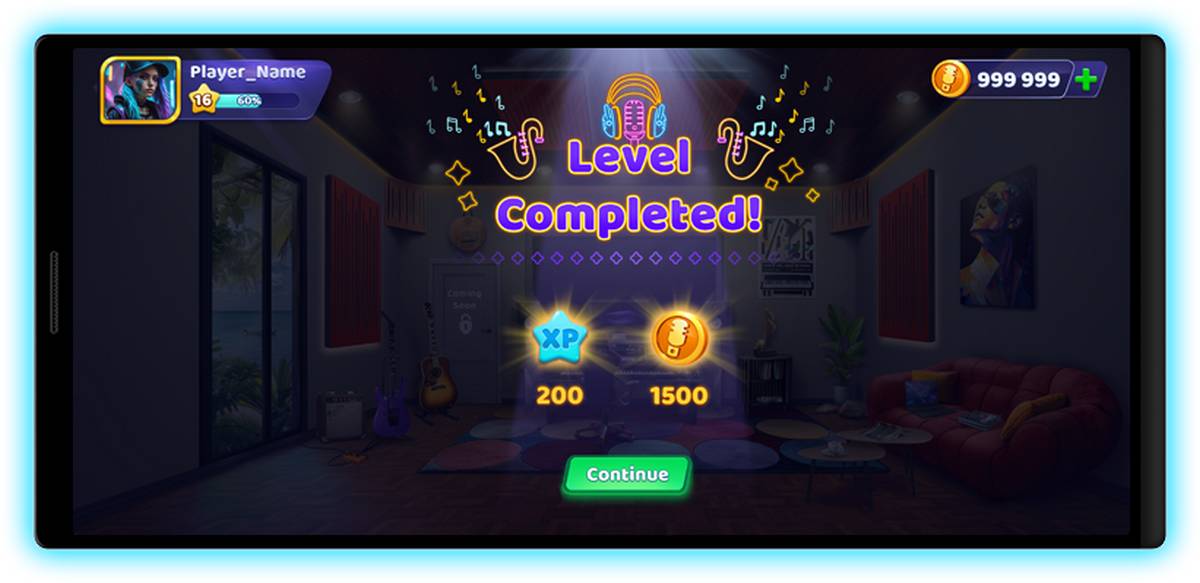
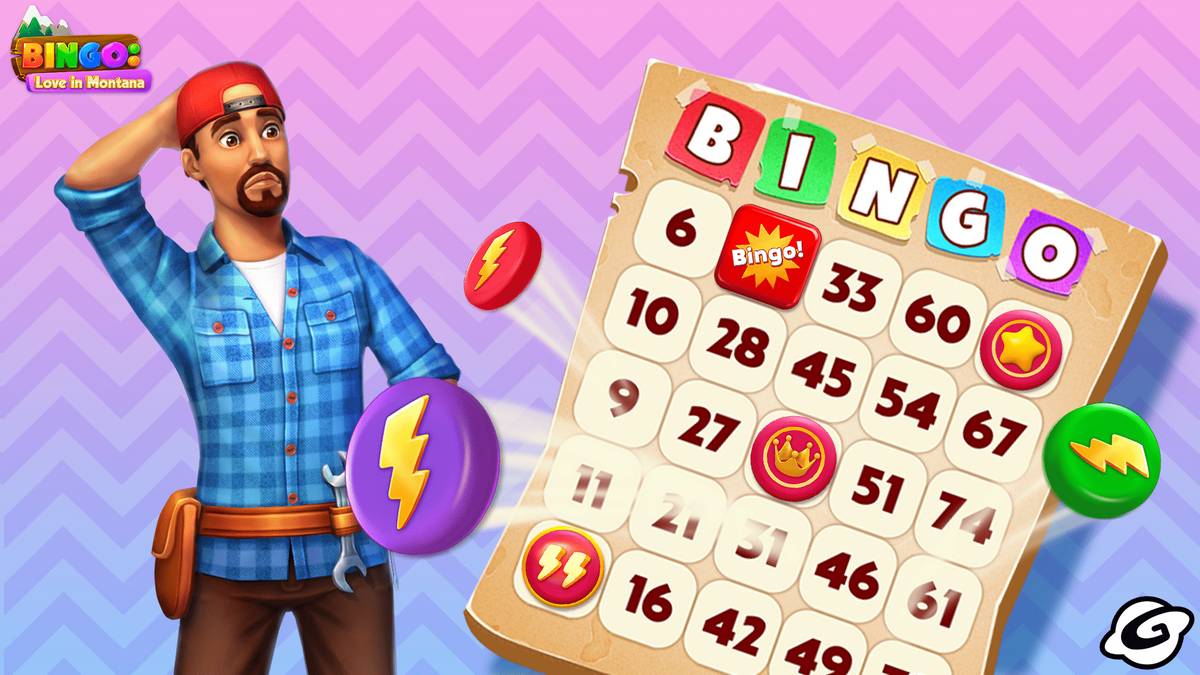
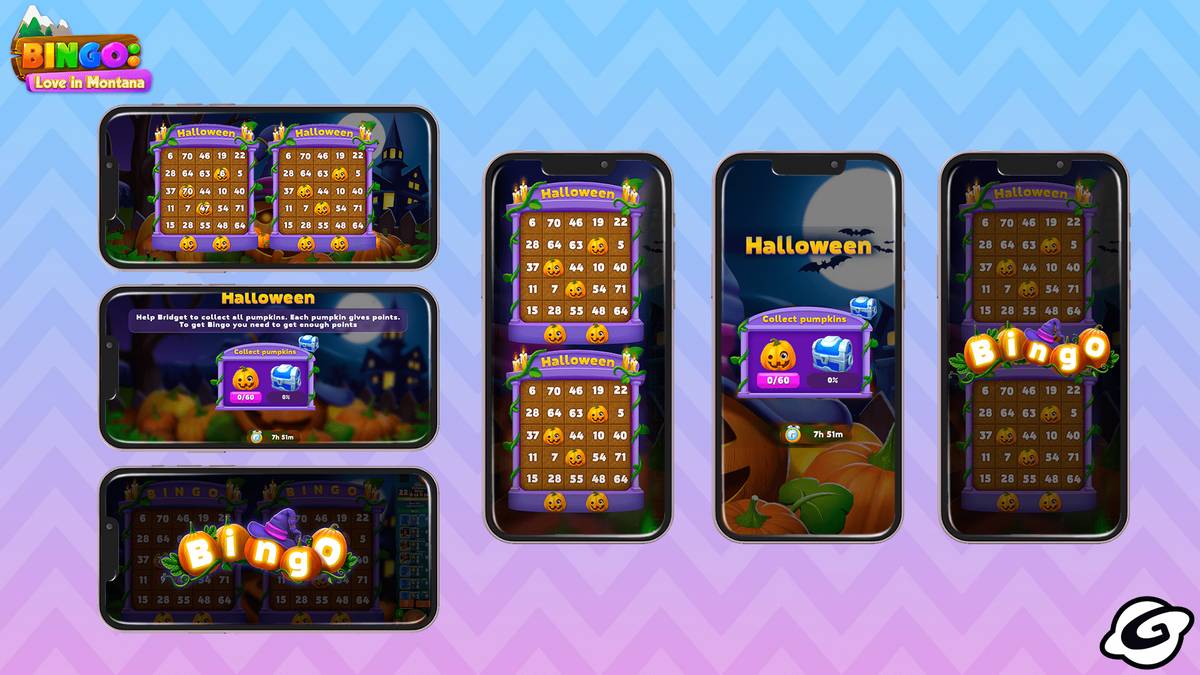
Ad creatives - video ads, gameplay hooks, trailers, and playable ads produced by the team that built the game, ready to test across channels at launch
-
Ad cabinet setup - Meta Ads, Google UAC, AppLovin, and other relevant networks configured, structured, and ready for spend from day one
-
In-game and ads analytics - MMP configuration, event taxonomy, funnel tracking, and attribution setup so every impression, install, and player action is measurable
-
Traffic testing and iteration - initial spend across channels to gather signal, identify winning creatives and audiences, and establish your baseline KPIs
The output of this cycle is not just installs. It is the data set that tells you - and any publisher or investor you speak to - whether this game has a viable business model and what it will cost to scale it.
Publishers and investors are not evaluating your game anymore. They are evaluating your numbers. CPI, Day 1 and Day 7 retention, early ROAS, LTV projections - these are the metrics that open doors. We help you get them.
Ad Creative Formats: What We Produce and Why Each Matters
Not all creative formats serve the same purpose. At the first-UA stage, the goal is not brand awareness - it is signal. You need to know which creative concept, which audience segment, and which channel combination produces the most efficient installs. That means running the right mix of formats from the start.
We produce two primary formats for mobile game UA campaigns.
Video Ads: Gameplay Footage, Hooks, and Trailers
Video remains the dominant format across Meta, Google UAC, AppLovin, and most major mobile networks. At the first-UA stage, video serves two distinct jobs: generating installs through scroll-stopping gameplay footage, and supporting store page conversion through trailer-style cuts.
The first three seconds determine everything. A video that does not immediately show something a player wants to experience gets skipped. Because we built your game, we know which mechanic creates instant recognition, which visual moment is the most satisfying to watch, and which hook format fits your genre's audience expectations.
Video creative types we produce:
-
Gameplay capture ads - core loop footage optimized to show the most compelling 15-30 seconds of play
-
Hook-first formats - opening with the most magnetic moment, designed for short attention spans on Meta and TikTok-style placements
-
Trailer cuts - for App Store and Google Play store pages, and broader awareness placements
-
Variant sets - multiple versions with different hooks, lengths, or audience angles, ready for structured A/B testing
Playable Ads: Interactive Mini-Demos
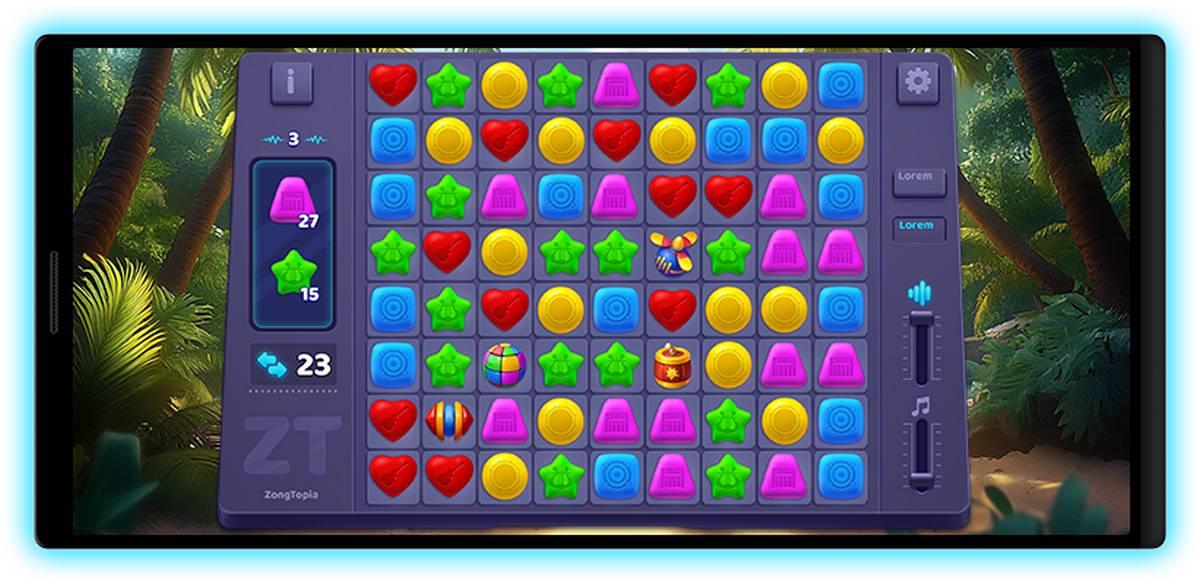
Playable ads give a potential player a 15-30 second interactive experience of the core mechanic before the install prompt appears. They consistently outperform static and standard video for games with strong, immediately understandable loops - because the user has already self-qualified by the time they tap install.
A playable built by the team who engineered the original mechanic will always be more accurate and more representative than one assembled from a design document. The feel, the timing, the difficulty curve of those first few seconds - all of it matters, and all of it requires knowing the game from the inside.
|
Format |
Primary Goal |
Key Channels |
|---|---|---|
|
Gameplay video |
Install volume, core loop demonstration |
Meta, Google UAC, AppLovin |
|
Hook/trailer video |
Store page conversion, brand awareness |
App Store, Google Play, YouTube |
|
Playable ad |
High-intent installs, self-qualified users |
Meta, Google, Mintegral, IronSource |
How We Test Creatives and What We Measure
Running ads without a structured testing process is how studios burn budget without learning anything. The point of the first UA cycle is not to generate installs at scale - it is to generate signal efficiently. That signal becomes your KPI baseline.
The Testing Process
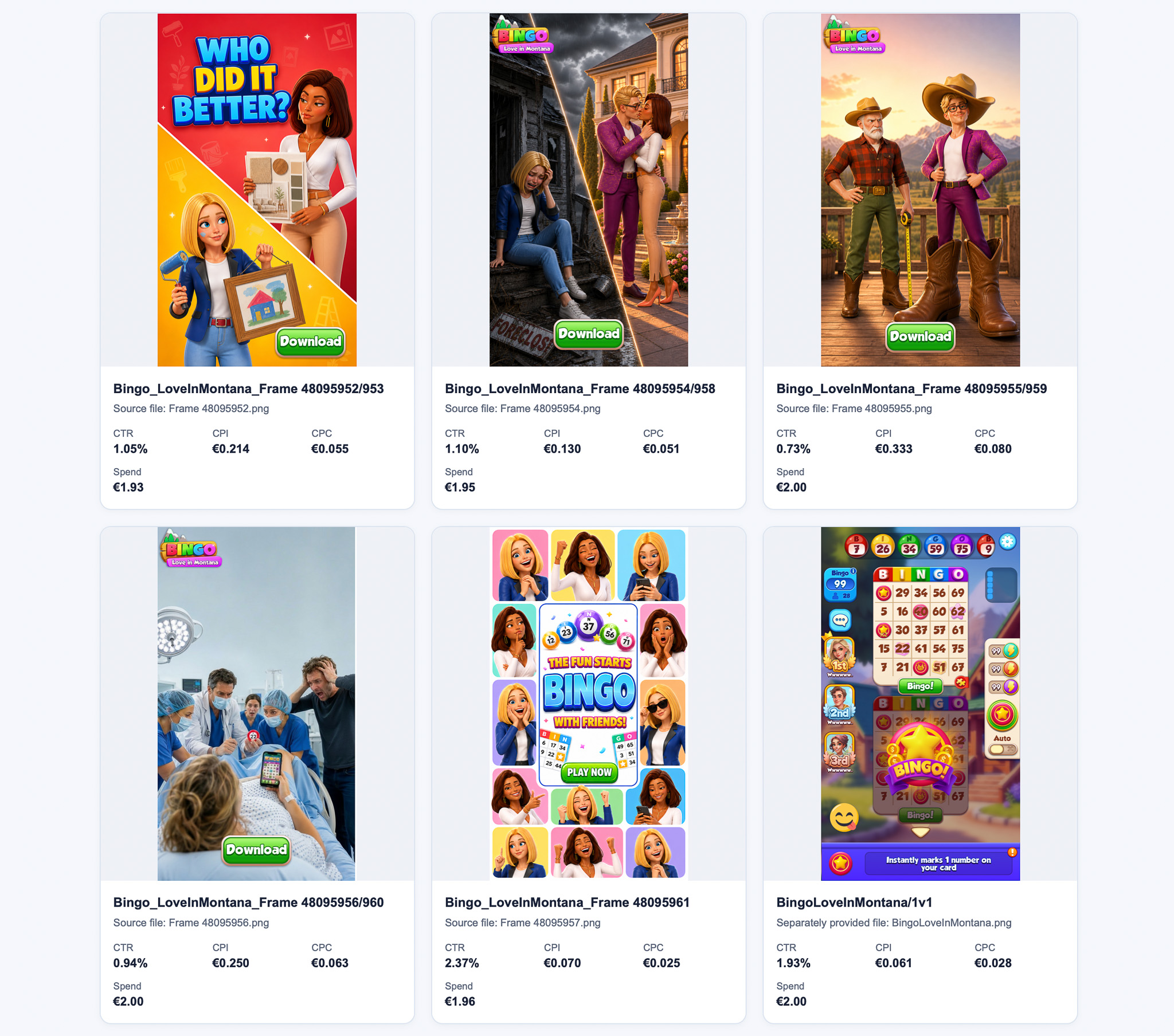
Once analytics are live and ad cabinets are configured, we push an initial set of creative variants into controlled spend tests across your target channels. Each variant tests a different hypothesis: a different hook, a different format, a different audience angle. We track performance at every level of the funnel.
The iteration loop is straightforward:
-
Launch a structured variant set - multiple creatives with different hooks, formats, or audience angles go live simultaneously
-
Gather signal - we track IPM (installs per mille), CPI, and early funnel behavior to identify what is working and what is not
-
Cut underperformers - variants that are not pulling their weight are paused early to protect budget
-
Iterate on winners - top performers get new variants built around their winning element
-
Establish baseline KPIs - once the winning combination stabilizes, we document the unit economics that define your game's scaling potential
KPIs We Track
The metrics we measure cover the full funnel from impression to monetization:
|
KPI |
What It Tells You |
|---|---|
|
IPM (Installs per Mille) |
Creative effectiveness - how well the ad converts impressions to clicks to installs |
|
CPI (Cost per Install) |
Channel and audience efficiency - what it costs to acquire one player |
|
Day 1 / Day 7 / Day 30 Retention |
Whether players are staying - the most important signal for publisher and investor conversations |
|
ARPU / LTV (early) |
Early revenue per user and projected lifetime value - the basis for scaling decisions |
|
ROAS (Return on Ad Spend) |
Whether the channel is profitable at current spend levels |
|
Funnel drop-off points |
Where players are leaving the onboarding or early game - feeds back into product iteration |
These numbers do not just tell you whether the ads are working. They tell you whether the game is working - and they are exactly what any publisher or investor will ask to see.
The goal of the first UA cycle is not to scale. It is to find out what it will cost to scale, and prove that scaling is worth it.
Who This Is For
This service is built for founders and studios at a specific inflection point: you have a game that is ready - or nearly ready - and you need to get it in front of a real audience, generate real data, and have something credible to show when the next conversation happens.
That next conversation might be with a publisher. It might be with an investor. It might be with your own team deciding whether to scale spend or pivot. In every case, you need the same thing: real KPIs from a real UA cycle, not projections or estimates.
This is the right fit if you are:
-
A startup preparing for a publisher pitch - you need Day 1/7/30 retention, CPI benchmarks, and early ROAS data before any publisher will take you seriously
-
An indie founder self-publishing for the first time - you need to know your unit economics before committing to a scaling budget
-
A studio that built the game but has not run UA before - you need a team that can set up the full infrastructure and run the first cycle without a steep learning curve
-
A founder who wants one team accountable for the build, the launch, and the first UA results - no handoffs, no gaps, no finger-pointing when something does not perform
We have done this with our own titles. We know what the data looks like when a game is ready to scale, and we know what it looks like when the product needs more work first. That judgment is part of what you get when you work with us. y know the game inside out
Ready to Get Your Game in Front of a Real Audience?
The market has changed. A finished build is no longer enough to start a meaningful conversation with publishers, investors, or your own scaling budget. You need the numbers - and getting the numbers requires the full first-UA infrastructure to be in place before you spend a dollar on traffic.
Galaxy4Games handles the complete picture: game development, ASO, ad creative production, analytics setup, ad cabinet configuration, and traffic testing - continuing into LiveOps and long-term scaling once your KPIs prove the game is ready to grow. One team, one accountability chain, from the first line of code to the first KPI report and beyond.
Book a consultation to discuss your game's launch and UA strategy. We will walk through where you are in development, what your goals look like, and how we structure the first UA cycle as part of a full-cycle engagement.