





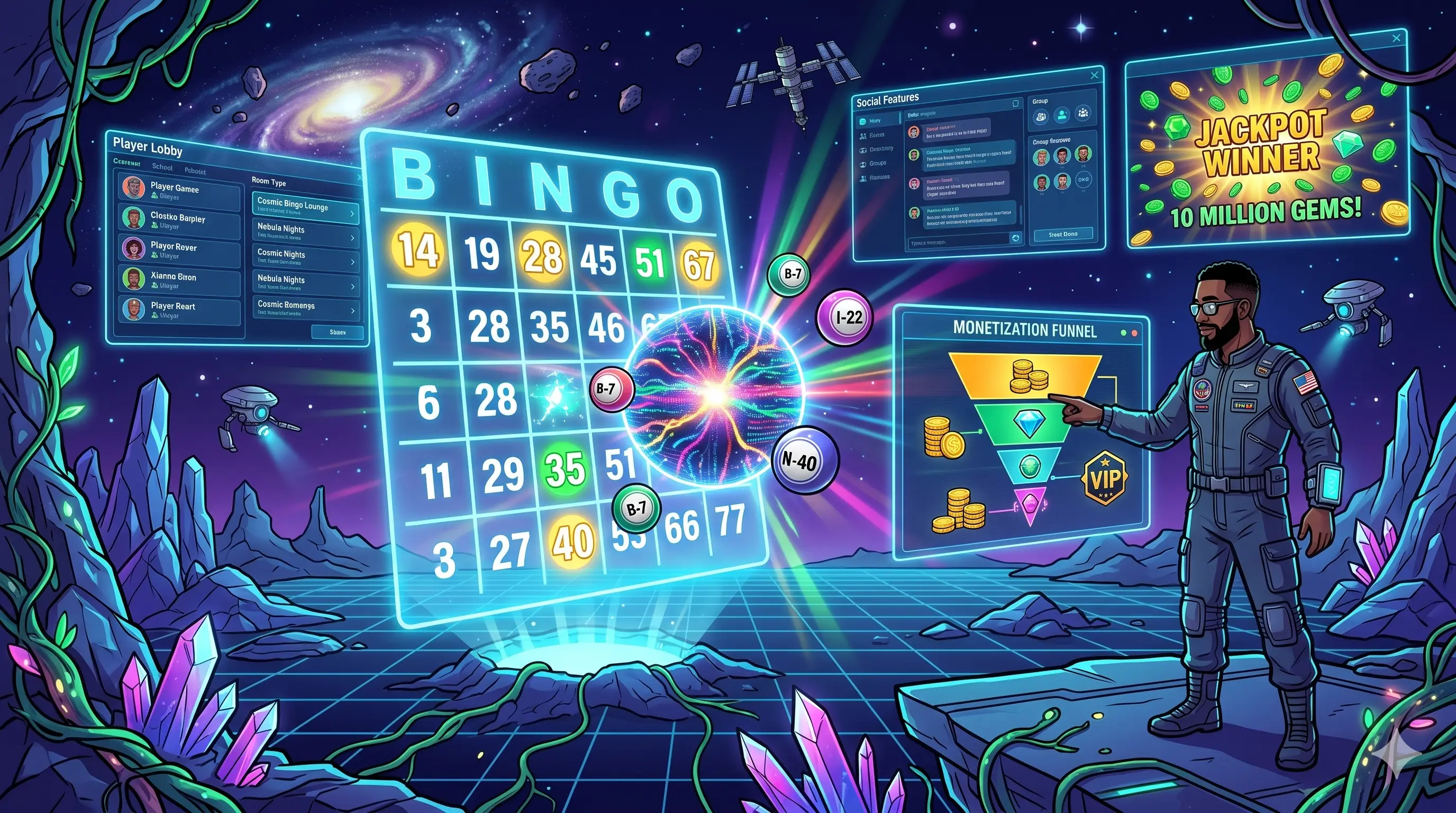
Bingo Game Development: Features, Mechanics and Monetization
Bingo game development has evolved far beyond traditional number-calling gameplay. What was once a simple, chance-based social activity has transformed into a highly engaging digital product category, especially within mobile and casual gaming markets. Today’s bingo games incorporate layered progression systems, social features, LiveOps events, and monetization mechanics that rival top-performing casual titles.
The resurgence of bingo in digital ecosystems is not accidental. Its simplicity lowers the barrier to entry, while its adaptability allows developers to build deep engagement loops. For studios targeting scalable and cost-efficient game production, bingo represents a strong opportunity when combined with modular systems and LiveOps strategies.
Understanding Bingo Game Mechanics
-
Core gameplay loop
The fundamental loop in bingo revolves around purchasing cards, drawing numbers, marking matches, and completing patterns. This loop is simple but highly scalable when layered with additional systems. -
Pattern systems
Players complete patterns such as lines, diagonals, corners, or full cards. Modern games introduce dynamic patterns that change per session, increasing variability and replayability. -
Multi-card gameplay
Allowing players to manage multiple cards simultaneously increases engagement and monetization potential, as players invest more resources per session. -
Auto-daub systems
Automated marking reduces friction and allows players to focus on strategic elements like power-ups and card selection instead of manual interaction. -
Power-up mechanics
Power-ups such as instant daub, extra balls, or pattern reveal introduce controlled strategy into a luck-based system, improving retention.
Core Features of a Modern Bingo Game
-
Room systems
Rooms segment players into different environments based on difficulty, rewards, and themes. This creates a natural progression path and supports player segmentation. -
Progression systems
-
XP and leveling
Players gain experience through matches, unlocking new rooms and features. -
Unlockable content
New cards, themes, and mechanics are gradually introduced to maintain engagement. -
Social systems
-
Chat features
Real-time communication reinforces the social nature of bingo. -
Leaderboards
Competitive layers encourage repeated play. -
Team systems
Guilds or clubs enable cooperative engagement and long-term retention. -
LiveOps and event systems
-
Time-limited events
Seasonal or themed events drive urgency and increase session frequency. -
Daily challenges
Encourage consistent player return and habit formation.
Importance of Bingo in the Current Market
Bingo has become a cornerstone product type for social casino game development companies targeting mobile-first audiences. Its combination of accessible mechanics and deep monetization potential makes it one of the most reliable genres in the casual game development space, attracting both established publishers and funded startups.
-
Low barrier to entry
Bingo games are easy to understand, making them accessible to a broad demographic, including non-traditional gamers. -
High retention potential
When combined with progression and LiveOps systems, bingo can achieve strong retention metrics comparable to other casual genres. -
Scalability across platforms
Bingo games perform well on mobile, web, and even social platforms, making them ideal for cross-platform strategies.
Deep Dive: Systems That Drive Engagement
-
Economy systems
-
Soft currency
Used for purchasing cards and basic gameplay actions. -
Hard currency
Premium currency tied to monetization and faster progression. -
Reward systems
-
Chest mechanics
Randomized rewards increase excitement and engagement. -
Milestone rewards
Provide long-term goals and player motivation. -
Collection systems
-
Card collections
Players collect themed cards or items that provide bonuses. -
Event collections
Limited-time collectibles tied to LiveOps events.
Practical Framework: How to Build a Bingo Game
-
Step 1: Define the core loop
Establish the base gameplay and ensure it is smooth, intuitive, and scalable. -
Step 2: Design progression layers
Add leveling systems, unlockables, and rewards that extend player lifetime. -
Step 3: Implement monetization early
Integrate monetization systems during development, not as an afterthought. -
Step 4: Build LiveOps infrastructure
Prepare tools for running events, promotions, and updates post-launch. -
Step 5: Optimize UX and accessibility
Ensure the interface supports fast gameplay and clear feedback.
Modular Systems in Bingo Game Development
-
Standardization across products
Modular systems allow developers to reuse core bingo mechanics across multiple titles, reducing development time. -
Faster support and maintenance
Updates and bug fixes can be applied across all games using the same modules. -
Battle-tested systems
Proven systems reduce risk and improve performance stability. -
Reduced cost and development time
Reusable modules significantly lower production costs. -
Better LiveOps execution
Modular LiveOps tools enable faster deployment of events and content updates.
Monetization Strategies in Bingo Games
-
In-app purchases
-
Currency packs
Players buy soft or hard currency to continue playing. -
Power-ups
Monetized boosts that enhance gameplay. -
Ads monetization
-
Rewarded ads
Players watch ads in exchange for bonuses. -
Interstitial ads
Used carefully to avoid disrupting gameplay. -
Subscription models
Offer VIP memberships with exclusive rewards and benefits.
Common Challenges and Mistakes
-
Over-reliance on luck
Without strategic elements, players may lose interest quickly. -
Poor economy balance
An unbalanced economy can lead to player frustration or churn. -
Weak LiveOps strategy
Lack of content updates reduces long-term engagement. -
Cluttered UI
Complexity can alienate casual players.
Conclusion
Bingo game development offers a unique combination of simplicity and scalability. By transforming a traditional mechanic into a system-driven product with progression, monetization, and LiveOps, developers can create highly engaging experiences that perform well across multiple platforms.
Studios that leverage modular systems and focus on long-term engagement strategies are better positioned to reduce costs, accelerate development, and maintain consistent growth. This approach aligns with how bingo game development companies like Galaxy4Games build scalable, efficient, and high-performing game ecosystems through full-cycle game development.
If you need to find bingo game developers specializing in social casino games, look for studios that combine technical ownership with proven live titles. Galaxy4Games offers game development outsourcing built on reusable architecture and integrated LiveOps, giving your bingo product the foundation to scale from soft launch to long-term retention.