





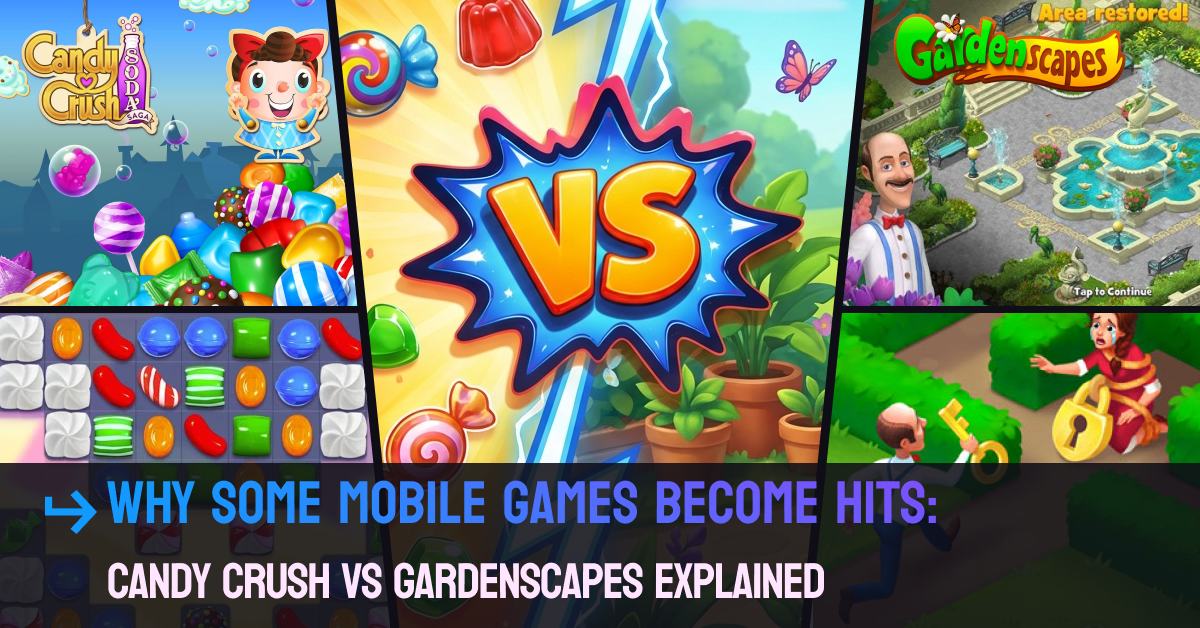
Why Some Mobile Games Become Hits: Candy Crush vs. Gardenscapes Explained
Mobile game markets are not driven by luck — they are driven by design systems that engineer habits, emotions, and spending behavior. While thousands of games launch every year, only a small fraction become long-term revenue machines. Two of the most iconic examples of sustained success are Candy Crush Saga and Gardenscapes.
At first glance, both are “just match-3 games.” But one is a pure puzzle economy machine, while the other is a meta-driven emotional progression system. Understanding why they became hits reveals the core principles that separate top-grossing titles from the graveyard of forgotten releases.
This article breaks success down into:
-
The history behind their creation
-
Key innovations
-
Addictive simplicity
-
Emotional vs. mechanical motivation
-
Content scalability & FOMO
-
Common development mistakes
-
Conclusion
The History of the Creation of Candy Crush & Gardenscapes
King Studio
Before Mobile Success
King did not start as a mobile powerhouse. In the 2000s, the company produced browser mini-games and later shifted to Facebook during the social gaming boom. Their strategy was industrial: launch many titles, test performance, shut down failures, and scale what worked.
Importantly, Candy Crush was not King’s first match-3 game. The studio had been experimenting with the genre for years.
The Market Shift of 2011–2012
Several major changes reshaped the industry:
-
Facebook's organic reach declined
-
Mobile devices became the primary gaming platform
-
Players preferred short, frictionless play sessions
King took an existing match-3 formula and rebuilt it for this new environment.
Playrix Studio
Studio Origins
Playrix originally developed PC hidden object games. They already had a title called Gardenscapes, but it was a premium hidden object game rather than a free-to-play service.
Genre Crisis and Transformation
By 2014–2015, the hidden object genre was declining due to:
-
Weak monetization
-
Decreasing audience interest
-
Match-3 dominating the charts
Playrix needed a new direction while preserving their core identity: decoration, atmosphere, and narrative. This led to the rebirth of Gardenscapes as a match-3 title. Within a few years, it became one of the brightest stars in the genre.
Key Innovations
Candy Crush
-
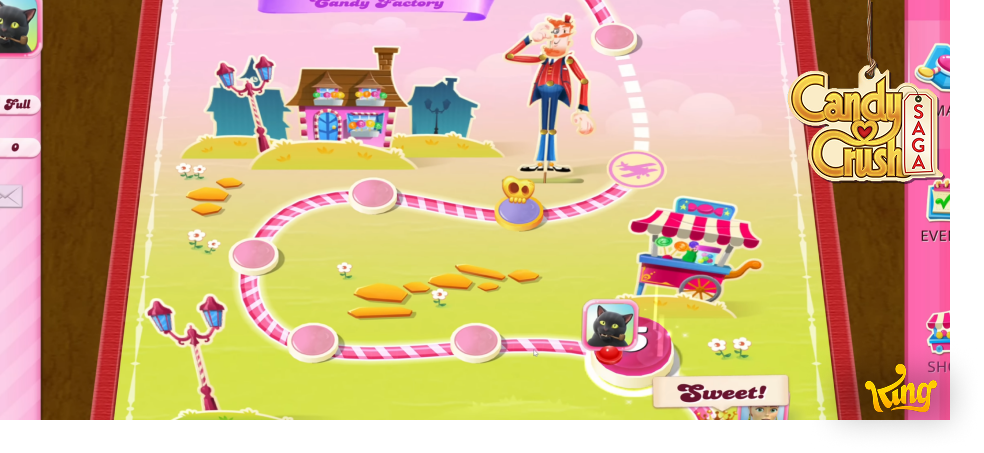
A Level Map Instead of Endless Play — Players saw visual progression and a clear sense of journey.
-
Ultra-Simplified UX — Minimal text, large tiles, and onboarding through interaction rather than tutorials.
-
Lives System + Near-Win Balancing — Players frequently lost within one move of winning, creating emotional tension and strong replay motivation.
Gardenscapes
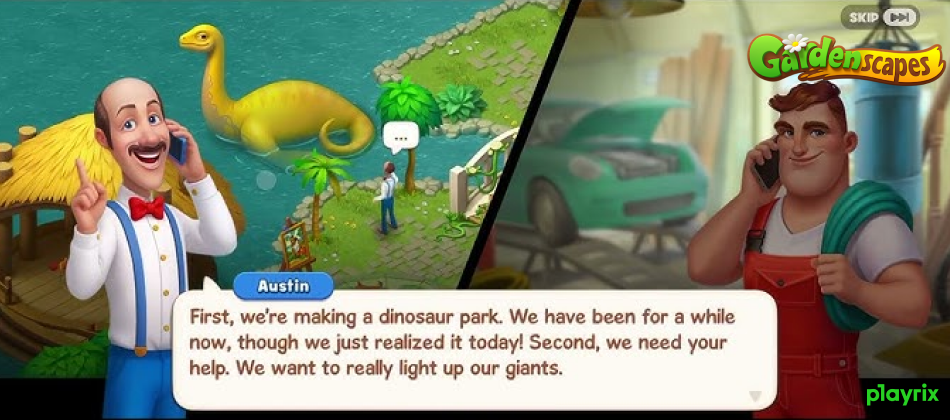
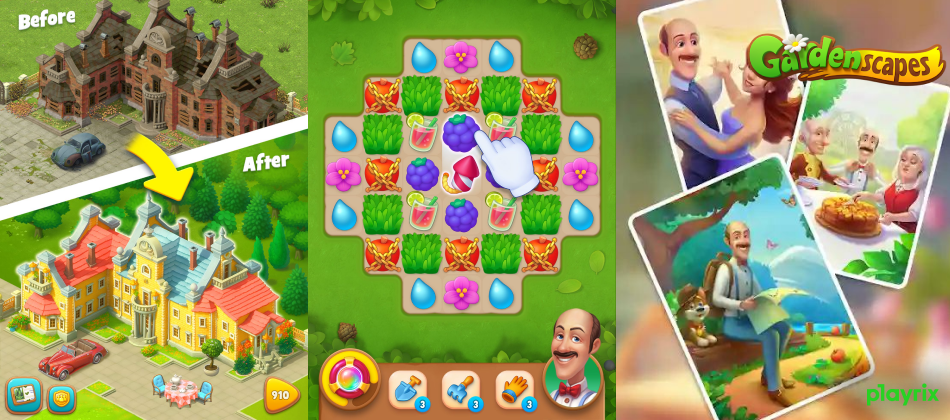
Playrix made a radical shift: the puzzle became the work, and the renovation and story became the reward.
Players completed levels not for the puzzle itself, but to:
-
Restore the garden
-
Interact with characters
-
Advance the story
-
See visual transformation
King and Playrix chose completely different engagement strategies — one focused on mechanical mastery, the other on emotional progression.
Addictive Simplicity
Both games follow the same rule:
The first session must feel like zero-friction entertainment.
If players feel confused or overwhelmed early, they uninstall and never return.
Candy Crush
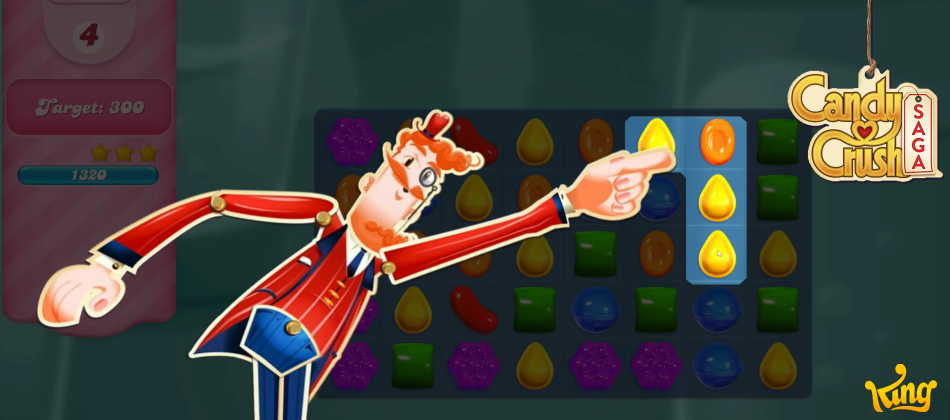
-
No story to learn
-
No complex systems
-
Easy early levels that make players feel skilled
-
Teaches through action, not explanation
Gardenscapes
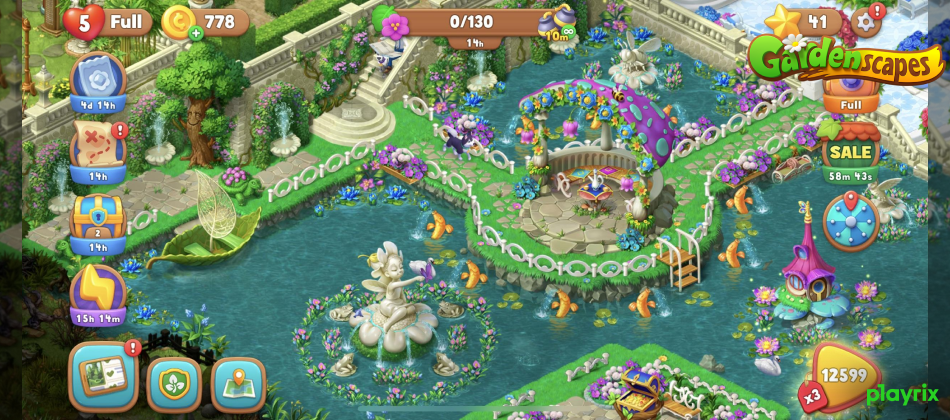
-
Introduces narrative immediately
-
Keeps early levels simple
-
Hides systems behind a “star” currency
-
Players see only “fix the garden,” not a complex economy
Simplicity builds habit before complexity appears.
Mechanical Motivation vs. Emotional Motivation
Candy Crush is driven primarily by mechanical motivation — the desire to beat a level and overcome difficulty.
Gardenscapes is driven by emotional motivation — attachment to the story, characters, and transformation.
Candy Crush Motivation
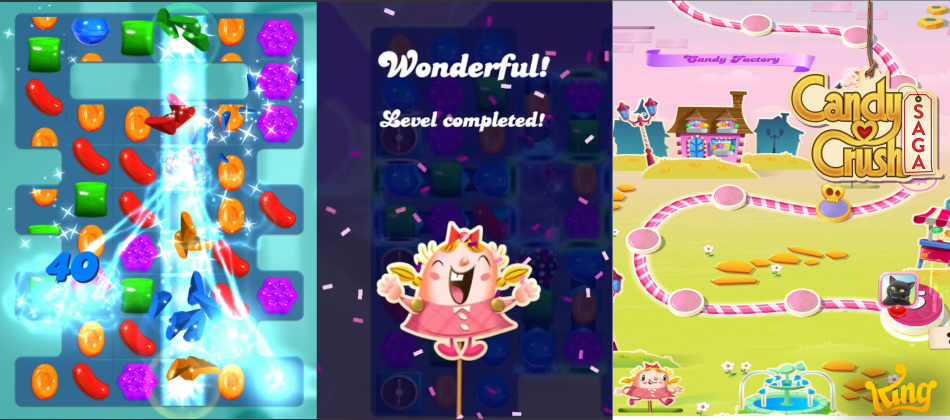
-
Beat the level
-
Overcome difficulty
-
Progress along the map
Gardenscapes Motivation
-
Fix the garden
-
See character reactions
-
Uncover the story
In Gardenscapes, match-3 becomes a means, not the goal.
Content Scalability & FOMO
Both games are effectively endless. Players can play for years without reaching the end, and developers constantly add new content.
FOMO (Fear of Missing Out) is a major retention factor. Players don’t want to abandon:
-
Their progress
-
Their decorated garden
-
Thousands of completed levels
This creates a long-term engagement loop that has worked for over a decade.
Common Mistakes Developers Make
When trying to clone hits like Candy Crush or Gardenscapes, many developers fail because they copy mechanics but not systems.
❌ No strong meta reason to play
❌ Difficulty feels unfair instead of near-win
❌ No emotional reward
❌ Poor first-session onboarding
❌ Weak LiveOps cadence
❌ No progression fantasy
Conclusion
Both games succeeded for different reasons, which can be summarized below:
|
# |
Aspect |
Candy Crush Saga |
Gardenscapes |
|
1 |
Core Motivation |
Beat levels and clear the map |
Restore the garden and follow the story |
|
2 |
Role of Match-3 |
Main gameplay focus |
Tool to progress meta systems |
|
3 |
Emotional Driver |
Challenge & mastery |
Emotional attachment & transformation |
|
4 |
Meta System Depth |
Light (map, events) |
Deep (renovation, narrative) |
|
5 |
Progression Feeling |
Moving forward |
Visible world improvement |
|
6 |
Session Structure |
Short, snackable sessions |
Longer, goal-oriented sessions |
|
7 |
Monetization Trigger |
Level frustration |
Story progression desire |
|
8 |
Visual Rewards |
Explosions, cascades |
Before/after transformations |
|
9 |
Design Philosophy |
Data-driven optimization |
Experience-driven journey |
|
10 |
Retention Hook |
“I can beat this level” |
“I want to see what happens next” |
How Galaxy4Games Helps Build the Next Mobile Hit
Building a successful mobile game today is not about copying mechanics — it’s about building scalable systems, validating ideas fast, and operating with data from day one.
Galaxy4Games works as a true co-development partner, helping studios and publishers turn strong concepts into market-ready, scalable products.
Modular Development & LiveOps Frameworks
Galaxy4Games develops games using modular solutions and a proven LiveOps framework that significantly reduce development time and costs while keeping quality high.
This approach:
-
Creates a solid foundation of reusable systems across future projects
-
Enables easy scalability when KPIs prove market fit
-
Establishes production standards that speed up iteration without technical debt
-
Supports long-term LiveOps from the very first release
Instead of building everything from scratch every time, teams focus on what truly differentiates the game.
Game Application Template for Faster Time-to-Market
Galaxy4Games provides its ready-to-use game application template that accelerates production even further.
Combined with modular systems, this allows teams to:
-
Launch fast MVPs for soft launch and market testing
-
Run time-to-market experiments without sacrificing architecture or quality
-
Avoid rework once KPIs are validated
-
Seamlessly scale successful prototypes into full live products
This makes modular development the ideal approach for testing new mobile game ideas while staying fully prepared for global launch.
Analytics-Driven Co-Development Approach
Galaxy4Games doesn’t just build games — it thinks like a product partner.
The team:
-
Works closely with clients to define and reach key KPIs (retention, ARPU, LTV, CPI)
-
Makes data-driven decisions throughout development and LiveOps
-
Continuously analyzes player behavior to improve engagement and monetization
-
Treats analytics as a core design tool, not an afterthought
This shared ownership mindset ensures that every feature, system, and update is aligned with business goals.
Proven Experience in Launching & Operating Mobile Games
Galaxy4Games brings hands-on experience from:
-
Launching its own products
-
Co-developing and supporting client titles
-
Operating games post-launch, not just delivering builds
This includes:
-
LiveOps execution
-
Post-launch optimization
-
Traffic acquisition support
-
KPI analysis and iteration
Clients benefit from a partner that understands the full lifecycle of a mobile hit, not just production.
Constant Market Analysis & Genre Awareness
The mobile games development market evolves fast — genres rise and fall, and player expectations shift.
Galaxy4Games continuously:
-
Analyzes market trends and genre performance
-
Tracks top-grossing mechanics, metas, and LiveOps strategies
-
Evaluates what works right now, not years ago
This ensures every project is built with current market realities in mind, increasing its chance of success.