





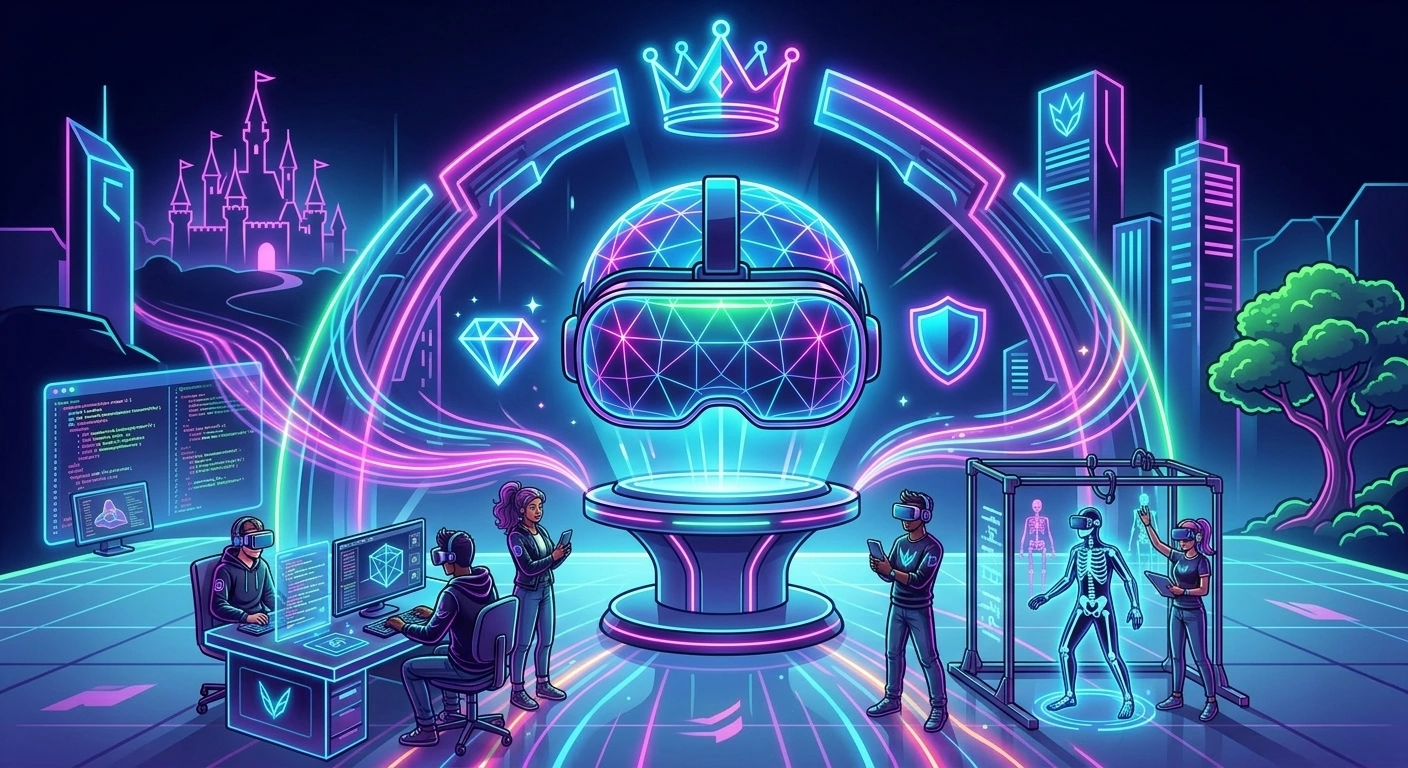
Top Virtual Reality Game Developers Building the Future of Immersive Games
Virtual reality is no longer experimental. In 2026, VR game development is entering a mature phase driven by improved hardware, cross-platform ecosystems, and more sophisticated interaction design. As headsets become more accessible and performance improves, immersive gameplay is reshaping how players experience digital worlds.
This article highlights the qualities that define top virtual reality game developers today, the technologies they rely on, and how scalable VR production pipelines support long-term innovation.
What Defines a Leading VR Game Development Studio?
Top virtual reality game developers share several characteristics:
-
Deep understanding of spatial interaction design
-
Expertise in real-time rendering and performance optimization
-
Experience with motion tracking and haptic systems
-
Scalable multiplayer VR architecture
-
Cross-platform VR deployment strategies
VR game development companies require more than adapting traditional game production mechanics. It demands purpose-built systems designed for immersion.
Leading Virtual Reality Game Developers in 2026
1. Meta’s Oculus Studios
Oculus Studios continues to shape the VR ecosystem through first-party titles optimized for Meta Quest devices. Their focus on accessibility and ecosystem growth has expanded VR adoption worldwide.
2. Valve
Valve’s work in immersive gameplay and physics-based interaction has influenced modern VR standards. Titles developed for SteamVR demonstrate how strong interaction design enhances presence.
3. Resolution Games
Resolution Games has become known for polished VR experiences that combine social interaction with strong gameplay mechanics. Their ability to adapt across platforms makes them a key VR player.
4. Survios
Survios specializes in action-driven VR titles with strong production value, emphasizing movement systems and high-intensity experiences.
5. Galaxy4Games
At Galaxy4Games, we approach VR development with a scalable, modular mindset. Rather than building isolated VR prototypes, we design immersive systems within structured production pipelines that support multiplayer integration, LiveOps updates, and cross-platform expansion.
Our VR projects focus on:
-
Performance-optimized environments
-
Modular interaction systems
-
Backend-ready multiplayer infrastructure
-
Scalable content updates
-
Long-term ecosystem compatibility
This approach ensures that immersive innovation aligns with business scalability.
The Technology Behind Immersive VR Experiences
Top companies specializing in VR game development rely on advanced technology stacks that include:
-
Unreal Engine and Unity VR toolkits
-
Custom interaction frameworks
-
Motion tracking APIs
-
Real-time physics systems
-
Cloud-based backend architecture
Performance optimization is critical. VR demands high frame rates and low latency to prevent motion sickness and maintain immersion.
VR Multiplayer and Social Experiences
The future of VR is social. Multiplayer VR environments require:
-
Low-latency networking
-
Spatial voice integration
-
Avatar synchronization
-
Persistent world systems
Scalable backend architecture becomes essential as user bases grow.
Challenges in VR Development
Despite rapid growth, VR development presents challenges:
-
Hardware fragmentation
-
Performance constraints
-
High production costs
-
Complex UX design
Studios that implement modular systems and reusable pipelines reduce risk and accelerate innovation.
Final Thoughts
The top virtual reality game developers in 2026 are not just creating immersive experiences. They are building scalable, performance-optimized ecosystems designed for long-term growth. As VR hardware evolves, studios that combine strong interaction design with modular production pipelines will lead the next wave of immersive gaming.
At Galaxy4Games, we design VR projects with scalability, performance, and cross-platform expansion in mind. If you’re exploring immersive game development and want a technical strategy built for growth, let’s build the future of VR together.