Marble Ball Madness: From a Live Game Foundation to the First Store Build in 10 Days
Project Overview
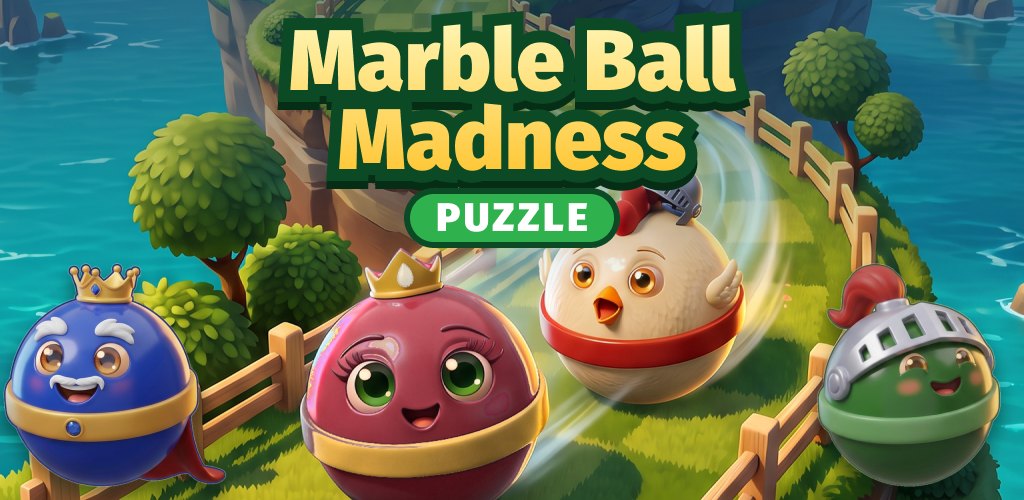
Marble Ball Madness is an upcoming rolling-ball puzzle game where players guide a ball hero across island courses, collect coins, and reach the portal.
Starting from a copy of one of our live games, we replaced the original core gameplay with a rolling-ball mechanic and built a new game world around it. In just 10 days, the project progressed from its starting point to the first internal store build, combining game design, art production, level creation, LiveOps integration, localization, and store preparation.
This case study shows how Galaxy4Games combines an established game foundation, modular production workflows, and human-led decision-making to accelerate development without treating the project as a simple reskin.

Project at a Glance
-
10 days — From project start to the first internal store build milestone
-
300 levels — Across 12 biomes and 30 story regions
-
14 review rounds — Resulting in 31 documented level-design rules
-
~1,200 art images — Produced in batches
-
5 languages — English, Spanish, German, Russian, and Turkish
-
34 screens — Checked against their designs on two phone shapes
The Starting Point: A Proven Game Foundation
Day 1 — Replacing the Core Gameplay
We started from a copy of one of our live games, which already provided a working meta-game layer, including lives, coins, the shop, offers, events, and analytics.
On the first day, we replaced the original gameplay core with a rolling-ball system. From that point onward, the work focused on giving Marble Ball Madness its own gameplay experience, visual identity, characters, story, and worlds.
Using an existing production foundation allowed us to build on established functionality while concentrating development effort on the elements that made the new game unique.
Game Design: 300 Levels, 12 Biomes, 30 Regions
Days 1–4 — Establishing the Game's Direction
The design phase established the core gameplay rules, a story arc covering all 300 levels, the cast of heroes and villains, and a world plan spanning 12 biomes and 30 cursed regions.
Our leads approved the story and new biomes on day 4, giving the subsequent production stages a clear direction to follow.
UI and Visual Identity: A New Look Across Every Screen
Days 1–3 — Re-Theming and Screen Validation
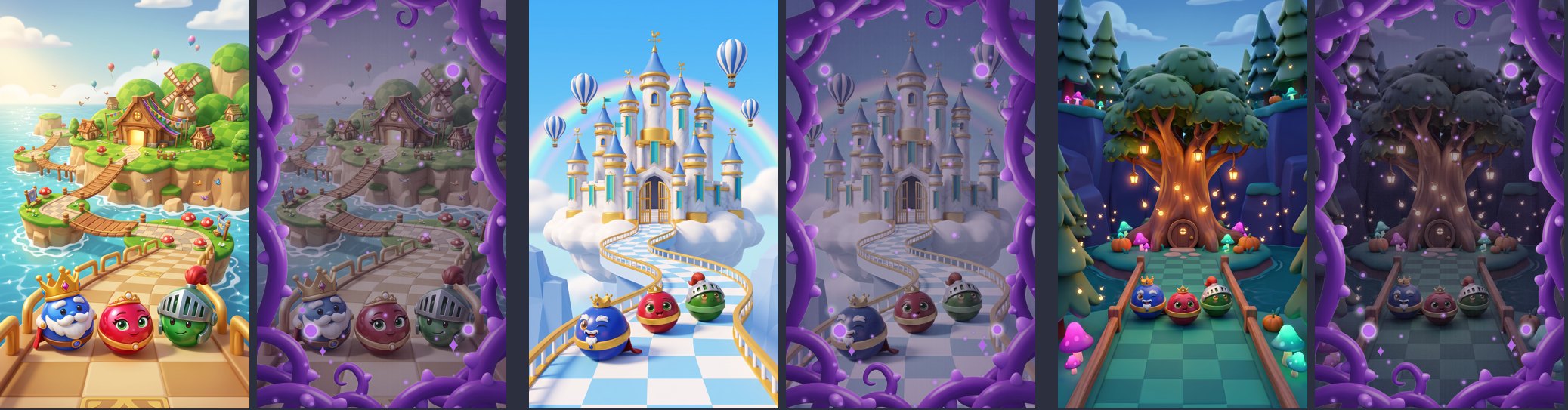
We transformed the design board from the source game's original look into Marble Ball Madness's green-meadow visual style.
Every screen was then checked in Unity against its design on two phone shapes. In a single review, we checked 34 screens and fixed 31 of them in the same batch, leaving no outstanding items from that check.
Art Production: Approximately 1,200 Images
Days 1–6 — Building the New Visual World
Around 1,200 images were produced in a handful of batches. These covered the re-themed interface, characters and their expressions, and story key art.
Each world was represented in two states: restored and cursed. Every art batch was estimated and approved before production began, helping maintain clear direction throughout the process.
Level Design: 300 Levels and 31 Rules for Consistency
Days 3–10 — Building and Reviewing the Courses
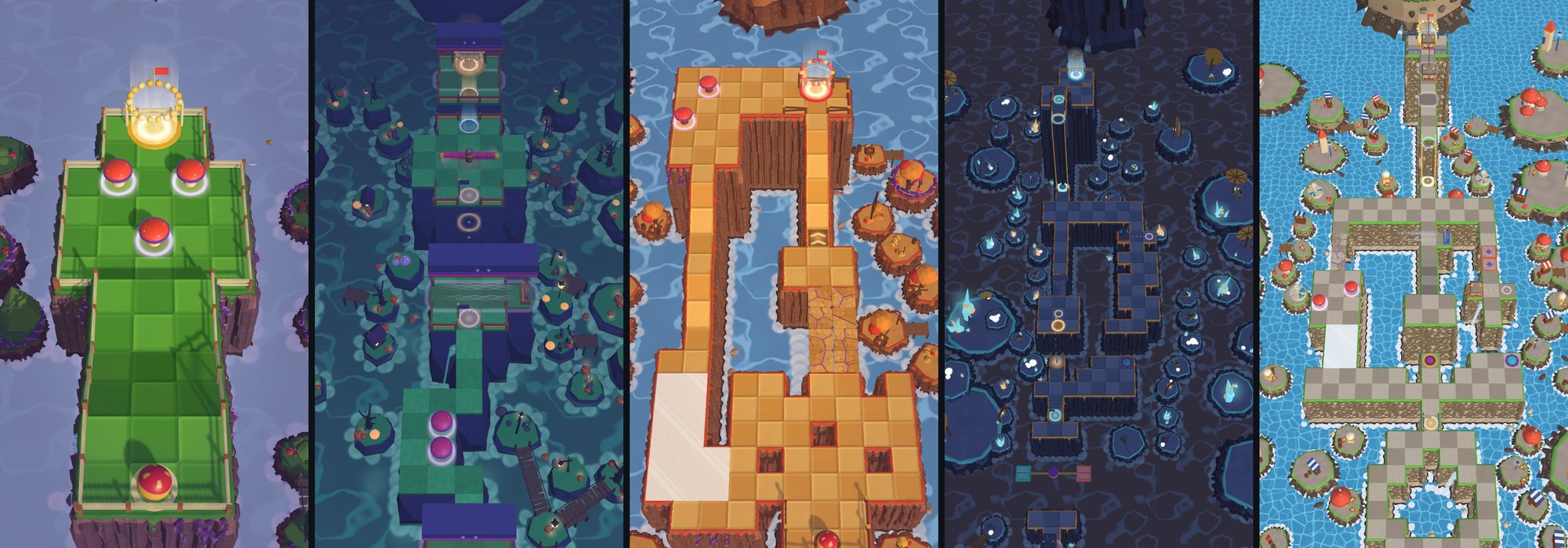
We designed 300 levels in batches and reviewed them over 14 rounds.
Instead of treating review comments as isolated corrections, we translated them into a documented set of 31 level-design rules. These included keeping alternative route choices close in difficulty and varying level shapes.
The courses were built using a 3D tile kit created in Blender, giving the different worlds a shared set of building pieces.
This approach helped turn recurring feedback into practical production rules, improving consistency across a large volume of levels.
LiveOps: Building on Existing Operational Experience
Week 1 — Adapting Live Game Systems
The progress event, daily missions, and offers were brought over from our live game's existing functionality through our LiveOps library and adapted to the new game's visual identity.
For example, the progress event became Firefly Trail, with new artwork and text.
This allowed the project to build on systems already used in a live game while adapting their presentation and content to Marble Ball Madness.
Localization: Five Languages
Day 10 — Preparing the Game's Text
We prepared 202 text entries in five languages: English, Spanish, German, Russian, and Turkish.
The texts were managed through a shared translation sheet and imported into the game.
Store Preparation: From Gameplay to the First Internal Build
Days 3–11 — Store Listing and Release Preparation
We built the store listing using research into comparable games. Store videos were recorded by an autopilot that played real levels and toured the meta-game experience.
On day 11, the first build was submitted to Google Play's internal testing track.
This marked the first internal store build milestone in the project's initial production cycle.

Human Decisions, Structured Production
Agents prepared each production block, while our team retained responsibility for the decisions that shaped the game.
Our leads approved the story, biomes, and characters; reviewed every level batch; selected art directions; answered questions collected by the agents during each stage; and decided when the build was ready for the store.
The workflow combined delegated production tasks with human oversight at the points where creative direction, quality, and readiness mattered most.
Challenges and Lessons Learned
1. Finding Art That Was Easy to Miss
Starting from an existing game means inheriting more than the visible interface. Small elements, such as loading icons or signs, can remain unnoticed during an initial re-theme.
A dedicated content review helped us identify and replace elements that had been missed.
2. Making Level Difficulty Consistent
Early level reviews repeatedly highlighted uneven difficulty between route choices. We documented the feedback as explicit design rules, reducing the risk of repeating the same issues across subsequent batches.
3. Coordinating Work in a Shared Project
With several agents working in the same editor, long-running operations required a clear coordination rule: whoever started an operation marked it, and nobody else touched the project until it was complete.
Simple production protocols helped keep concurrent work organized.
What This Case Study Demonstrates
Marble Ball Madness illustrates how Galaxy4Games combines experience from developing and operating live games with structured production processes to accelerate new game development.
An existing technical and operational foundation provided working meta-game functionality and LiveOps systems. A new gameplay core, original world design, art, and level content gave the project its own identity. Review feedback was converted into reusable production rules, while our team retained control over the creative and quality decisions.
The result was a project that progressed from its starting foundation to its first internal Google Play build within the initial 10-day development milestone, with the build submitted on day 11.
Looking to Build Your Next Game?
Galaxy4Games is a full-cycle game development partner combining hands-on game production experience, in-house technology, and practical knowledge of operating live titles.
Whether you're developing a new mobile game, validating a concept, or looking for a production partner who understands what happens beyond development, we can help you establish a suitable foundation and move toward launch.
Contact Galaxy4Games to discuss your game project.